
Showing posts with label reviews. Show all posts

Tuesday, December 28, 2021

Witty's Year End Book Review 2021

Ahhh, where did the time go?

Things picked back up at work, which included an uptick in ordering more science fiction novels and nonfiction titles, and involved reading a few more titles than usual just to keep up with the hottest authors and current topics.

That all means I'm still promoting a narrow list of things I liked most this past 2021. This has actually taken me longer than usual because I really couldn't figure out a Best Fiction novel to choose from even though there were a couple I liked well enough. Rather than leave the category empty I had to think it over. So here goes.

Best Fiction

Zoey Punches the Future In the Dick, David Wong

There's a trope called Exactly What It Says On the Tin, where if a book title reads "Kaiju Fighting Robots" and there's 50 foot monsters fighting 50 foot robots, then HELL YEAH that's what we're looking for. And this novel goes exactly into the zany, hyperkinetic comic book craziness the title tells us it'll do.

It's Halloween season in a crazy superhuman-filled metropolis where Zoey - a young woman turned criminal overlord - gets attacked by a zombie claiming she's responsible for its death and an impending apocalypse. Now targeted by other crime lords who don't like Zoey's attempts to convert her empire into a force for good - as well as a new threat calling itself the "Vanguard of Peace" - she has to solve this mystery, get prepped for Halloween, avoid cyborg cats, and survive to the next novel in this new crazy-ass series.

Written by the guy who brought us John Dies At the End and This Book Is Full of Spiders, this book - sequel to Futuristic Violence and Fancy Suits, which I hadn't actually read yet, I only ordered this book for my library because the title was hilarious - does a good job of creating its own world with quirks and decent literary twists. It does provide relevant commentary on the horrific nature of online trolling and the emotional toll it takes on its victims, as Zoey copes with a threat calling itself Blowback that turns out to be just a handful of loathsome trolls who don't represent anybody but themselves. If you're trying to find something to read that's not as ponderous as most of the current sci-fi / fantasy market, this could be a fun alternative.


Best Non-Fiction

The Cruelty Is The Point, Adam Serwer

A lot of the non-fiction books I've read and place here on my blog as best reads all happen to document the rise to power of one donald trump, a bankrupt businessman/con artist who rose to the Presidency on a mountain of lies and a broken political system that let him bluff his way in. Where most of those books documented the atrocities trump committed once in power, Serwer - writer/editor at The Atlantic - takes a larger view to examine the mental state of a nation that willingly accepted this overt bully/demagogue promoting an agenda driven by Cruelty as his platform. Anchored by the essay that gives this book its title, Serwer delves into the various racial and sexist world-views underlying the American psyche, and exposes the rage and hate that trump and his ilk feed on for profit and power. As important a read as any other books on trump's violent rhetoric and abusive behaviors.

Runner-Up: Hiding in Plain Sight, Sarah Kendzior

Similar in focus to Serwer's essays, Kendzior documents not only trump's psychosis but also looks at the parts of America - the Red State regions abandoned by an American culture and economic system of the 21st Century that they distrust out of religious and racist world-views that dominate there - that are never going to accept the more liberal Blue State regions that cannot comprehend how those regional Americans are so hate-filled and contrarian.


Best Graphic Novel (or Ongoing Series)

Wonder Woman Historia Vol. 1, Kelly Sue DeConnick (author) and Phil Jimenez (artist)

Normally I'm a Batman fan first and foremost, but lately there's been a lot of great work done with Wonder Woman as the primary hero of the DC Universe, and it's all capped by this recent release on the Black Label (magazine) format, a massive retelling of the origin of that comics' universe Amazon culture, the emergence of Wonder Woman's mother Queen Hippolyta, and a war between gods and genders. 

What's knocking everyone off their feet is the work Jimenez put in as the artist. Arguably one of the most detailed illustrators in the business, inspired by greats like George Perez and drawing in a similar style harking back to Perez's tenure on Wonder Woman in the late 1980s, the first issue already has been hailed as a masterpiece of graphic art.
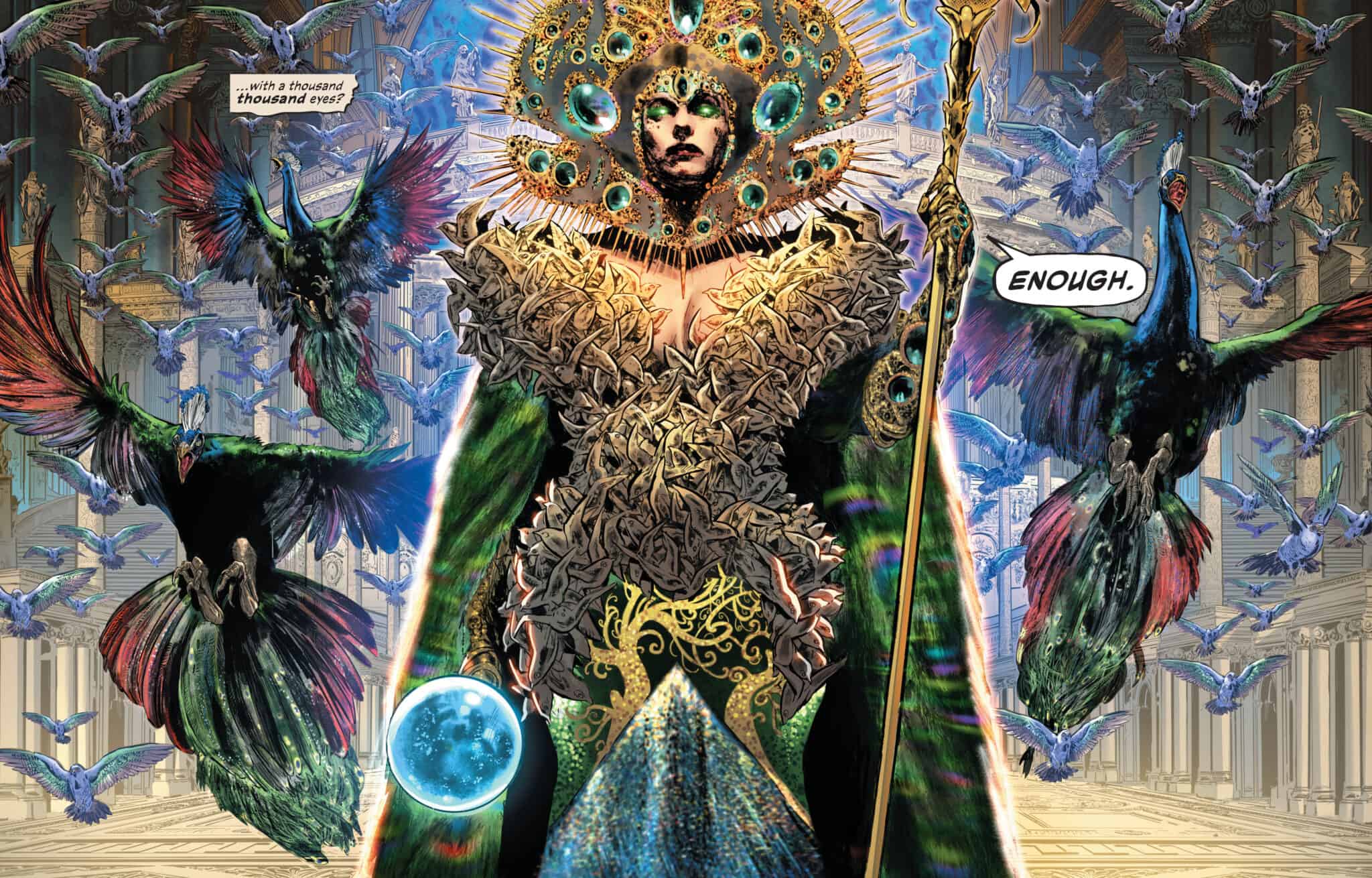

While less a story about Wonder Woman and more about the history - hence the title - that would lead to her "birth" as the Amazons' princess warrior, there is well enough here to entice readers who don't even follow comics to pick up the title. Like most Black Label works, this is NOT a comic book for children and its depictions of abuse gets brutal (given the themes of male-on-female violence, this is unavoidable). 

And again, the artwork on this is incredible: Any one panel of Jimenez's art could stand alone as a framed work on museum walls. This is arguably the best-drawn comic in ages.


Best Work by Someone I Email, Tweet, or Chat With on a Regular Basis

Guns of the South, Harry Turtledove

One of the few advantages of Twitter is that well-known authors occasionally take to the tweets to make their voices heard on the issues, and Mr. Turtledove is one of them. As a writer of Alternate History (AH) novels - and with an academic degree in Byzantine History, which does explain a whole lot of his interest in What-If narratives - he does have knowledge about the rise and fall of empires/civilizations, and if anything the 21st Century political landscape is full of that requiring his observations. So tweet he does, and often I tweet/retweet his stuff with follow-up commentary by him, so it's all good.

That said, Guns of the South is one of Turtledove's better-known What-If novels: The Confederate army under General Lee is facing defeat in early 1864 due to lack of supplies and lack of rifles. A group of men calling themselves "America Will Break" (AWB) show up with an offer of a new, rather lethal weapon they call the AK-47, more advanced and deadly - and literally futuristic - than the Union repeating rifles. Along with oddly packed rations most 20th Century people would recognize as Cold War-era MREs and guarantees of unlimited supply of both, Lee accepts the deal... and leads to the South utterly defeating the North within weeks. With this sudden change of history - where Confederate success means their dreams of a slave nation continue - the timeline we know of by the 21st Century becomes a darker, more treacherous place... especially when Lee and the other Southerners find out who the AWB really are and what they really want.

What makes Turtledove's efforts here intriguing is how he doesn't fall into the traps most other AH/What-If authors fall into: The one little "For Want of a Nail" moment doesn't always end up with clean and unrealistic happy results that bad AH novels fall into. For all that the AWB hoped for - that their time-travel events would create a slave-controlling empire that would ally with them in a future war of their own making - it doesn't change the historic global trends of slavery getting outlawed. Indeed, the European powers - Great Britain especially - that hesitated siding with the Confederacy against the United States now have a reason to openly oppose the new Confederate nation that still propagates a slave system. Defeating the Union doesn't stop slaves in the South from fleeing for safe havens further north. And for all that slavery did promoting racism in the United States, the AWB's more hateful views become shocking to Southerners who prided themselves on more genteel behavior.

Turtledove's novels cover a lot of major historical events - the American Civil War, World War II (he comes up with some doozies for "Hitler Wins" scenarios including lizard aliens), the Age of Exploration, etc. - so he has a bunch of novel series to go through. It'll be worth a look.


Best Work Including Stuff I Wrote

Strangely Funny VIII, edited by Sarah Glenn (Mystery & Horror LLC)

Many thanks again to the publishers at Mystery & Horror LLC, who accepted this year a story about 2020 aptly titled "War Of the Murder Hornets." It's about Murder Hornets, a legitimate imported death machine from Asia that contributed to a lot of madness the previous year (and are still around as a looming threat). Because 2020 was worth that kind of horror.

In some ways, 2021 was too.

/cries


Wednesday, September 8, 2021

Star Trek: Living In the Lower Decks

image from CBS Interactive

I once wrote about the Star Trek franchise being an optimistic, hopeful view of humanity's future (was that five years ago already? Happy 55th Anniversary then):

It spoke of the future: At a time humanity was threatened with nuclear war, environmental disaster, or worse, Trek suggested we would outgrow our worst demons and answer to the better angels of our nature, that we would achieve space flight and do so in ways that would let us explore the cosmos. That we would meet races like Vulcans and Klingons and myriad others, and that despite the differences we could blend, co-exist, share our wonder of the universe.

Star Trek is a reflection of the whole Earth: that we are a diverse species as humans, clinging to this small blue/green rock covered with air and water, facing daily challenges to survive but still looking upward and outward, dreaming up warp drives and seeking out exoplanets that might share other lifeforms. The drive to improve ourselves and improve our futures...

So that being said, another thing that science fiction geeks like to do with beloved franchises is to pull the thing apart, nitpick the errors and inaccuracies, what the literary academics like to call Deconstruction of an entire 'Verse of beliefs...

...and then put it all back together again with a sly awareness that we still enjoy the damn thing.

In the past five years or so, our entertainment media empires have exploded with content - movies, television shows, crossover materials - to fill the expansive and still-growing streaming capabilities that the Internet and high-quality video have reached this 21st Century (It's 2021, people!). Among them is/was/not sure of their current status Paramount Studios and/or the CBS network competing against the likes of Disney-Plus, which currently sits on so many franchises - Marvel, LucasFilm (Star Wars), Pixar, Disney's own empire - that Paramount/CBS had to hit back with one of the biggest franchises they own with Trek.

As a result, in the past three years they've come out with a new series ST: Discovery, followed up by a sequel/rebirth of Next Generation with the series Picard, and soon to include a reboot/prequel of the Original Series involving Captain Pike, Number One, and Spock called Strange New Worlds.

Into THAT mix of new content came an animated series fitting into the Original Timeline (yes, this is a problem with multiverses now) just after the Dominion War (ST:DS9 and ST:Voyager, also the movie ST: Nemesis) but before Picard's series. Thing is, this animated show was getting put together by people who worked Rick and Morty, a show that went out of its way to Deconstruct other shows and genres in a sometimes vicious (almost sadistic) fashion.

Star Trek: Lower Decks does indeed Deconstruct a lot of the known tropes for both science fiction and Star Trek itself... and yet for all of the gore, body horror, high-pitched screaming, and psychological trauma (not the audience, I'm talking about the in-show characters) the show is actually doing a good job of showing WHY the Trek Universe works the way it does... and why it's not a bad thing for humanity in the long run.

And it's actually a good show. Lemme get into that a little more.

The thing about space is that it's big, really big, and in that vastness of space there's millions of stars and hundreds of thousands of planets. A space that big requires a big Starfleet to explore and patrol it, meaning hundreds if not thousands of starships to trek it.

While the major shows of the Trek 'Verse either involved the crews that oversaw epic adventures (the Enterprise) or dealt with galactic crises (Deep Space Nine) or survived insane journeys (USS Voyager), there are still a lot of minor, almost common tasks that the rest of the Fleet works on. As the opening quote to Lower Decks notes:

First Contact is a delicate, high-stakes operation of diplomacy. One must be ready for anything when humanity is interacting with an alien race for the first time...

That is where the Enterprise gets involved. Alas...

But we don't do that. Our specialty is Second Contact. Still pretty important. We get all the paperwork signed, make sure we're spelling the name of the planet right, get to know all the good places to eat...

And the "we" in that opening narration is the crew of the USS Cerritos, a California-class starship that's not as glamorous as the Enterprise (the flagship of the entire Federation) or battle-tested as the Defiant, or even as quirky and durable as Voyager. Cerritos is part of one big happy Starfleet Bureaucracy, keeping up with the aftermaths of major battles and contacts and scientific findings that the major league starships resolve on a weekly basis.

The ship itself is part of a class that's easily interchangeable, one of a hundred named after small towns and cities in the state of California (a nod to the human-centric (actually American-centric) nature of Starfleet in spite of the hundreds of humanoids that make up the crews). The Cerritos is also not exactly in the best of shape, more like a 3-star hotel where the Enterprise would be a 5-star luxury resort.

And as the show highlights with most episodes, the Cerritos doesn't get any of the glamour gigs, dealing with supply runs, taxi services, minor planetary disputes, and finding out how bad the drinks are at the local Klingon coffee shop on Rigel VII. This ship is kind of like the lower deck of the Federation fleet itself.

What we get then is a show about the mundane, day-to-day activities of a large-scale employer that just happens to be a quasi-military exploration fleet that basically involves cleaning out holodecks of bio-refuse (oh yeah, the Internet of the Future is still for porn), daily maintenance checks of those sliding doors that don't magically open when they're supposed to open when you're ready to leave a room, and signing off on timesheets for the midnight shift in the astronavigation lab who really all goofed off in the bowling alley on Deck 10 instead.

You know, all the stuff that the important cast members don't have time to do because they're fighting the Borg or engaging in espionage against the Romulans or dating plasma ghosts from 19th Century Ireland. (Yes, that reference gets made in this show)

So we're stuck with the "lower deck" ensigns of Starfleet, such as Brad Boimler, an energetic newcomer out of Starfleet Academy who's a little too eager for promotion and too naïve to realize how dangerous the galaxy out there can get. Desperate for promotion, he's one of those extras you see on the bridge handing PADDs (the Tablets of the 24th Century) to another extra to make it seem like people are working.

He's been teamed up with Beckett Mariner, older and more experienced, who ought to be an officer by now except for her reckless disregard for regulations and diplomacy. Where Boimler wants to step up, Mariner wants to step out, and seems only to be in Starfleet because there's nothing else out there that gives her the opportunities to "explore new worlds" and "kick ass."

Filling in the Engineering side of things is Rutherford, a human who suffered an injury before all this and received cybernetic implants to help him function. He's the tech nerd of the group, more interested in making sure those sliding doors open properly rather than worry about a zombie infection or a bridge officer turning into a god.

Making this a four-team ensemble is Tendi, the token alien crewmember that provides the diversity of Trek philosophy (IDIC). She's actually from the "sexy alien" category: The green-skinned Orion women who add that allure of seduction and intrigue to the Trek 'Verse... Except Tendi is the sweetest, shyest, and least sex-obsessed crew member on the Cerritos (she was a little shocked to see Mariner's naked Olympic holodeck program).

It's through their viewpoint we witness the goings-on of a regular Starfleet cruise: The weekly crises resolved with the right application of technobabble; the quick fights over Prime Directive/Non-Interference quandaries that are resolved through insane troll logic; and the reality that Starfleet operates on a kind of repetitive ennui that requires a healthy balance of holodeck fantasizing and a lack of micromanaging in the workplace.

What makes Lower Decks work as a series is that its efforts at Deconstruction are not meant as dark or dispirited mocking, but a kind of deliberate examination of "what would it really be like for the day-to-day operations of Starfleet, away from the dashing heroics of the original show and its spiritual successors?"

One episode for example focused on "Scotty Time," a Trope about how Trek engineers would inflate their deadlines for repair jobs that would get finished earlier and make them look like miracle workers. In the Lower Decks, it's become a dirty little secret to have your projects use "Buffer Time" on the calendars so that you'd have time to juggle that project with other hobbies beneficial to the ship - or better still fix any emergencies that crop up while you're working on the main task. When the Cerritos' Captain Freeman finds out what "Buffer Time" means, she's enraged because she thinks the crew is deliberately slacking off work (and hurting her chances at promotion), and then sets immediate deadlines for projects to make her crew work faster. Instead, because the deadlines are too swift, too arbitrary, and too inflexible to allow responses to emergencies, the Cerritos turns into a chaotic mess. "Buffer Time" had been happening for so long, no one could remember how much time was needed to calibrate a sensor array.

By the show's own logic, Buffer Time was a necessity: it allowed the crew (employees) to work at a pace they inherently knew could let them function while allowing enough time to handle the crazy space stuff along with it.

Another episode delved into those nightmarish episodes that would happen where a crewmember or guest-star would suffer an accident that would cripple them... or infect them with an exotic incurable disease... or turn them into salamanders (oh, yeah, THAT was when I quit watching Voyager, ye Gods. Why can't we go to Warp 10?! It'll turn us into newts!!! (We got better. SHH!!))

When Boimler gets phased improperly during a transporter upgrade test, he's assigned to a transport ship under Division 14 to take him to a "retirement" spa called The Farm for treatment. These "accidents" to crew members have been so common that Starfleet did develop a protocol for handling it. While the episode careens into a crisis when the other passengers are convinced - because they've been en route for months - that there is no Farm, the matter is resolved when the transport finally arrives to an exotic, Risa-like planet that does take care of the injured personnel as they were promised.

Mixed into all of this is a critique of the serial storytelling of the early Trek series, how weekly escapades and epic movies would ignore the ramifications of those events down the line. As television narratives evolved in the past 20 years to allow for continuity - for novel-styled story arcs that ensured a coherent, developed history would emerge from what we watched - what were stand-alone episodes for TOS and TNG now seem antiquated, and leaving behind issues that the "lower deck" crews like the Cerritos would have to clean up after.

In this, the animated series' Deconstruction is more deliberate, and raises legitimate issues regarding the idealism of Star Trek's philosophy. The contradictions of "exploration and discovery" behind Starfleet curtailed by a Prime Directive that insists on non-interference with "lesser" yet sentient races. The sporadic threats of one-off villains like Pakleds coming back years later as serious threats. And the abuse of flare lighting in holodeck movies, okay, the emotional conflicts of allowing family members (Mariner is secretly Freeman's rebellious daughter for much of Season One) serve on the same ship.

But I come to praise Lower Decks, not to bury it. Underneath the snarky witticisms, gag replays of Trek's less-noble plot points, and obvious physical humor, there is some legitimate character development AND 'Verse development for a complex, overwhelming universe as Star Trek's entire franchise. For all the craziness the ensigns go through, you see how the excitement and challenges of space travel keep them going, even in the vastness of bureaucratic inertia where they work. That for all the eldritch horror (and repetitive cleaning chores), there is still Hope that humanity (that may seem a bit speciest, but it's the only way we can define the nature of Starfleet itself) will prevail.

It gives me hope that somewhere down the line they can plot out a decent crossover moment with Dr. Who and Star Wars and DC Comics and Marvel Comics and... and... YES, I KEEP HOPING FOR A MASSIVE CROSSOVER, DAMMIT. IT'S IN MY BLOOD!

In the meantime, Season Two is streaming... somewhere. CBS Access or some such. BINGE IT while you're buried alive. BIIIINNNNNGGGGEEEEE IIITTTT!!!!!!!

Wednesday, December 23, 2020

Witty's Year End Book Review 2020

You might think with a year-long pandemic - things at the library quieted down right quick by late January - I would find more time to read. Also, that my early year surgery that forced me to stay home for most of a month would leave me with that kind of time as well. Sad to note: the level of anxiety and stress in the midst of all that kind of reduced my reading habits this year. It wasn't I did not have the time - no longer wasting weekends at the movies, for one - it was that I lost a lot of focus to read. I'm sorry.

I did read *some* this year, and so in that regards I will list what I read as suggested reads to pass along to the seven people who follow this blog, thank ye. It's just... honestly? This wasn't a competitive year...

Best Fiction

My rules on what I like each year isn't that the work HAS to be from this year - I do try - sometimes it's an older published work I re-visit that regains my interest. That said:

Monstrous Regiment, by Terry Pratchett

Another of the Discworld books I've become fond of, this is one of the later works where Pratchett's world-building - especially the fantastic politics of the various nation-states engaged in border clashes - expands to make it a more realized realm. On Discworld, the Narrative matters and the Gods are real. The problem with the small nation of (looks it up) Borogravia is that their god Nuggan has gone mad, been mad for ages, and His insane proclamations have weakened the faith of the population, which still has to abide against his Abominations. It's led to a state of constant war with neighboring kingdoms, which has also led to the literal depletion of Borogravia's manpower... to the point where the young women are signing up for the latest war in order to get into (or out of) conflict to rescue their loved ones. Or so it seems.

Playing on the trope of Sweet Polly Oliver - with an actual Polly (this is how Discworld rolls, son) as the protagonist - the main characters find themselves the last standing military unit against Zlobenia. Relying on the military tropes as both parody and metaphor, the lads (or ladettes, however the case may be) must rely on their innate skills - vampire, troll, Igor, Joan of Archetype, what have you... just not their feminine ones, which becomes a plot point later - to break the cycle of madness (and free a soul they don't realize has been trapped by faith) and end the war. 

Where the book excels is Pratchett's subtle yet elaborate wordplay, and his willingness to tweak tropes for all they're worth. For example the vampire Maladict (whom Polly thinks is the only real man in her regiment) had traded out the addiction for blood to an addiction for coffee (the mainstay of any marching army, what what). When one of the bad guys (yes, he's a guy) steals the regiment's supply, it forces Maladict into withdrawal mode, mimicking the shell-shocked Vietnam trooper with increasingly powerful hallucinations that Maladict can broadcast. It's in this confused state that Polly herself can imagine "Copters in the LZ" even though she has no idea what a 'Copter or an LZ is. It also allows her to hallucinate walking with Death (yes, he's a Reaper Man) because after all every soldier walks with Death (plus he's contractually obligated to appear in every Discworld story). It's just that Polly's the only one on Discworld who told Death to keep quiet while they walked.

It's not one of Pratchett's best Discworld novels (Small Gods, Guards Guards, and Hogfather are far superior works) but it's an enjoyable read that's easy to get into even if you're not a hardcore reader of the series.

Dishonorable Mention: The Jack Reacher series by Lee Child

I'm sorry, but... I tried, I really tried to read a number of these books about an ex-military MP who walks the Earth getting into violent adventures. But it's just... almost all the same damn thing. He shows up, gets into fights with the locals, uncovers a conspiracy, occasionally has sex with a woman tangibly involved in the matter, wipes out the big bad's merc army in a gunfight, sometimes heads off in an epilogue to take out a corrupt government official who violated the oath of service to America, and goes wandering off to the next book. Half the dialog isn't dialog it's just the narrator writing "(This character) said nothing." I guess it's like Mac and Cheese for a large number of readers, but it's just overheated Revenge Porn. The Punisher does it better, dammit.

Best Non-Fiction

Very Stable Genius, by Philip Rucker and Carol Leonnig

If you follow me on my political blog, you might notice I am not a fan of donald trump (I refuse to capitalize his name as English grammar requires. The SOB obsesses over his name's presentation and the smaller I can make it the better).

So a lot of non-fiction I've been reading the past four years have been "What The Hell Happened" history/political science books focusing on the disaster that has been the trump Administration. Very Stable Genius is coming towards the end of trump's one-term tenure, and it looks back at all of the chaos and damage that occurred. Most telling is the ninth chapter where Rucker and Leonnig detail how - in an attempt by the Defense and State Departments to explain to trump just what is actually happening in the world - trump hijacked the meeting to spew his unfounded diatribes about our foreign allies, which all ended with trump - a draft-dodging self-obsessed whiner - insulting military officials to their faces:

Trump by now was in one of his rages. He was so angry that he wasn't taking many breaths... "I wouldn't go to war with you people," Trump told the assembled brass. Addressing the room, the commander-in-chief barked, "You're a bunch of dopes and babies." For a President known for verbiage he euphemistically called "locker room talk," this was the gravest insult he could have delivered to these people, in this sacred place. The flag officers in the room were shocked. Some staff began looking down at their papers, rearranging folders, almost wishing themselves out of the room..." (p. 136)

You might notice the book's title - trump's own words describing himself (like 74 percent of anything he says, it's a lie) - is a sharp rebuke: Everything in the pages details how trump is an unstable, self-absorbed fool. And it's someone who was put in charge of the United States for four painful years.

There's going to be a lot of books written about this era. Rucker and Leonnig's book should be one of the first ones to reach for.

Runner-up: The Public And Its Problems, by John Dewey

As part of my efforts to keep up with Pragmatism as a philosophy, especially with an eye towards promoting it as a political philosophy to counter the darker (cough Randian Objectivist cough) ideologies consuming our nation. I'm still re-reading it to see what I can translate into modern world-view explanation.

Best Graphic Novel (or Ongoing Series)

Wonder Woman: Dead Earth (Black Label), by Daniel Johnson

Part of DC Comics' efforts to re-imagine their main characters with edgier, more mature stories, the Black Label brand includes this retelling of Wonder Woman in a post-apocalyptic future where she emerges to find her attempts to save the World of Men had failed. Worse, the nuclear war that consumed the planet had turned her paradise into a monstrous realm that has abandoned any hope of peace at all.

In the same narrative take as Sejic's dark vision on Harleen, Johnson as writer/artist employs a stark and harsh art style similar in my mind to Frank Miller's work. It's the first time I've seen his artwork and I am impressed by it. I am going to keep an eye out for future works. 

Runner-up: Solutions and Other Problems, by Allie Brosh

It took about 7 years, but Brosh returned with a follow-up to her Hyperbole And a Half with another essay-styled series of comics about the everyday dramas of coping with the world. Where the earlier book's artwork was crudely pixelated work (the strength of the stories is Brosh's writing and observations), the new work is cleaner, sharper in tone as the writing itself gets sharper with experience.

Best Work by Someone I Email, Tweet, or Chat With on a Regular Basis 

The Last Emperox, by John Scalzi

Keeping up with Scalzi's Interdependency trilogy, which I started reading back in 2017 with The Collapsing Empire, the third and final volume focuses on the eventual collapse of a naturally-occurring hyperspace system (The Flow) and how it affects a galactic-wide human empire suddenly forced to find other ways to survive.

Intermixed with the efforts to discover the new portals to a shifting Flow network, Scalzi's main characters have to contend with the political backstabbing of an empire still driven by intrigue and ambition, where the bad guys from the first two novels have succeeded in seizing control of the one planet (End, literally at the end of the Flow) that has a sustainable human environment and are gathering the other Houses to overthrow Empress (well, Emperox to avoid the gender bias) Grayland and condemn billions of humans who need to reach End.

Some of the characters - including the villains - remain rather predictable playing out their roles in a Space Opera environs (did one of the baddies twirl a mustache at one point?). Scalzi still crafts a believable 'Verse with relatable characters and satisfying plot twists. There's no new ground really broken here - the themes of humanity, futurism, our relationship to the environment, these are all regular tropes of most science fiction - but it's a story well-told. 

Expect the SyFy miniseries in the next two-three years.

Best Work Including Stuff I Wrote

I did not get published this year, alas. Self-publishing even one of my short works seemed... wrong. I am struggling to keep my head in the writing game... I may have something published by next year, we will see.


Sunday, December 29, 2019

Witty's Year End Book Review 2019

This whole year had been busy in a lot of ways: Work at the library involved my taking on double-duty as an interim director; I was active with the Florida Writers' Association's Royal Palm Literary Awards as a judge (I did not judge in the fields I submitted, relax); I increased the amount of stories submitted to the markets to see if any publisher would like (just one: A sad truth is that writers face a ton of rejection and few victories. We live for the victories).

In all of this, I still found some time to sit and read, both for relaxation and for education/self-information. Here's what I had in front of me for 2019 and what I think deserves a huzzah or three for being effective reads:


Best Fiction

Black Spire (Star Wars Galaxy's Edge #2), by Delilah S. Dawson

I didn't read much fiction - I blame my heated political slant, see below - so what I did sometimes didn't keep my interest. This one did. Granted, I am a huge Star Wars geek and so I can get into books in that 'Verse quite easily, so this one already had a few bonus points to keep the grade up.

Tying in to both the aftermath of The Last Jedi movie as well as promoting a new Disney theme park called Galaxy's Edge, Dawson (who also wrote the well-received Phasma novel) sends her heroine/Resistance spy Vi to the Outer Rim in search of safe havens and new recruits. Instead Vi runs into a wretched hive of tourism and sunscreen (in other words Orlando Metro FL ow stop hitting me) where run-ins with First Order troops and vendors selling 800 credit t-shirts (ow stop hitting me again) keep her busy.

Dawson does write a lot of Young Adult, so a good amount of dialogue and description reads to a middle-school level than adult, but for me it's not a problem. What I enjoyed were 1) re-immersion into a 'Verse I love, 2) good storytelling, 3) likable characters and 4) the subtle Floridian snarkery of poking fun at our tourist industry while accepting its place in our lives.


Best Non-Fiction

The Man Who Sold America, by Joy-Ann Reid.

There are a TON of trump political books I can recommend, given my outrage and discontent about our nation's current predicament under his corrupt rule (yes, as an apostate moderate ex-Republican, I have a bias against that Shitgibbon). Reid's is one of the better ones worth your time, which focuses as much on trump's still-shadowy background and rise in business as well as his current acts of corruption and failure.

Honorable Mention: The Mueller Report (Washington Post edition)

In terms of our current events, keeping up with the political catastrophe that has been the trump Administration requires constant reading and constant reminding. Robert Mueller's years-long investigation into Russian interference with the 2016 elections, and the possibility of donald trump's involvement aiding them, may have come out in April and it may not have ended with proper closure... but a lot of the revelations even when redacted exposes a criminal enterprise behind everything trump has done and is doing right now (hi, impeachment over Ukraine military aid extortion!).


Best Graphic Novel (or Ongoing Series)

Harleen (Black Label), by Stjepan Sejic (DC Comics)

As part of a publication effort to print darker and edgier versions of their mainstream characters, this one focuses on THE breakout Batman rogue of the 1990s - Harley Quinn - to provide a more nightmarish origin story to Dr. Harleen Quinzel's run-in with (and corruption by) the Joker.

As always, the art is the biggest draw: Sejic works like a painter much of the time with the kind of detail to character designs (although I gotta admit a lot of people's chins start to look the same) that make you squint and zoom in to catch it. Also, he can draw nightmarish images that haunt more than terrify, fulfilling the darker/edgier requirement of the Black Label series. The plot itself covers familiar ground - foreshadowing of the demons Harleen herself carries with her, the meetings with Joker than begin her descent as a force for chaos - but Sejic refreshes them in an attempt to make the (anti) heroine a more intelligent and tragic figure that can later find the shred of redemption.

Dishonorable Mention: Doomsday Clock, Geoff Johns (DC Comics)

Not gonna provide a link here, because as a miniseries supposedly trying to tie in Alan Moore's Watchmen universe into the overall DCU this one has been a meandering mess. Considering how writer Geoff Johns had overseen the last decade or more of Crisis-level changes to the comic 'Verse narrative, this miniseries looks to be his latest - maybe last - attempt to clean up all loose ends caused by those shifts. I'm not sure it works: Characters introduced and then ignored for entire issues, plot points that weren't even present early on suddenly become the reason the whole story is being told... I just couldn't keep up with it. There was one bright moment in the entire series - where Manhattan becomes aware of the multiverse and how it's affected by the real-world metaverse - where you can see what Johns was aiming for... and if he made that more prominent from the first issue the miniseries might have been a more coherent work. But he cluttered it up too early and too often, and I walked away discouraged.


Best Work by Someone I Email, Tweet, or Chat With on a Regular Basis

Eye Spy (Valdemar Universe Family Spies series), Mercedes Lackey

Adding to the list of authors I've been in communication is Ms. Lackey, and for a roundabout reason. Ya see, I'm a fan of an MMO called City of Heroes that sadly got shut down a few years back... only for a dedicated fanbase to secretly start up a private server version of the game to continue to hard work of saving Paragon City. Well, earlier this year someone blabbed about the secret server, which launched a huge outcry of millions of fans who wanted to get back on it (oh, and the usual suspects of people complaining the secret server had access to people's credit card numbers). So the secret server managers released the game code and... well, as long as NCSoft doesn't bring the lawyer hammers down on anybody, the game is there to upload and play.

City of Heroes was huge in the day (and its revival one of the bigger gaming news of 2019), and it drew in a lot of well-known fans including Mercedes Lackey. She was such a fan of the game she wrote an entire superhero novel series called The Secret World Chronicles (unrelated to City of Heroes itself due to copyright) that she's kept up with to this day.

So here's the thing: In-game, they hold Costume Contests (CoH is legendary for its varied costume options for your game avatars) and one night they announced a secret prize. So I showed up with my most outrageous avatar (Lady Esoteric) and ended up winning! The prize turned out to be a gift copy of the second book in Lackey's Family Spies series set in her Valdemar universe, which she sent to me via email and basically qualifies her for this award. Congratulations! (ow stop hitting my Blaster)

You may need to get into the entire Valdemar 'Verse first, but I'll try to make it simple. There's a kingdom ruled by a benevolent monarchy beset by dark forces - at one point a rival border power, currently tribal raiders - that require the aid of magical creatures (known as Companions) and also magical people (known as Heralds) to protect the realm. The Family Spies series focuses on one Herald family where at least in the first two books the children develop their magical Gifts to serve both family and kingdom. Eye Spy focuses on Abidela (Abi for short) who discovers her Gift as a form of Scrying (the reading of inanimate objects) that can sense their physical weak points.

From there Abi is swept off to Wizard School the Collegium to hone her skills and train as her parents had to serve as a Spy. From there she hits the field working on a mystery involving a drowned village and political schemes that threaten Valdemar's reputation with their border allies.

Lackey's skills are in the details of her world-building, and crafting characters who are believable as social, living beings. I do encourage you to read the earlier Valdemar novels though to help get a better understanding of how that whole world works.


Best Work Including Stuff I Wrote

This has always been a narrow category, considering few publications accept the stories I submit. I made serious efforts this year with short story submissions but... well... Sigh. I need better adjective placement in the stuff I write, I think...

Anywho:

Strangely Funny VI, edited by Sarah Glenn (Mystery & Horror LLC)

Keeping up with the near-annual Strangely Funny series, I submitted another chapter of the ongoing Dhampyr storyline with Minette on vacation in "How a Vampire Gets a Tan". Set in the more current day of... well, after the events of a novel I've half-finished called Subway Night, it's a pretty straight forward story of why vampires don't tan outdoors (it's less to do with getting charbroiled and more to do with the excessive pheromone production when they sweat). Saying any further would spoil the rest of the story, but anyway it's a good volume and it's an overall great series so PLEASE take the time to purchase/download (available in Kindle) and read.

Happy New Year, everybody, here's hoping 2020 has a lot of fun reading ahead.

Monday, December 24, 2018

Witty's Year End Book Review 2018

For 2018, things have been super-busy at work to where I've cut back on fiction reading, so I'm racking my brain right now trying to remember what I've actually *read* or re-read.

Some of the rules to note: the works listed may not be new this year, but are ones I've read this year or re-read as a refresher of sorts. Thing is, you should be able to find them in your local library or at least online as an ebook for purchase. The links are to the Goodreads website where you can track your reading library for sharing with friends. That said, the Pumpkin Spice Must Flow...

Best Fiction

The Dispossessed, by Ursula Le Guin

Science fiction/Fantasy mistress Le Guin had passed away at year's beginning, and so one thing I'd done this year was catch up on the works by her I haven't read. (The ones I've read were Wizard of Earthsea, Left Hand of Darkness, Lathe of Heaven) I swore to read The Dispossessed and so I did.

It's part of the Hainish Cycle, placed in the same universe as Left Hand, but focusing on two different human-ish civilization (well, maybe three of them) vying against each other over key philosophical beliefs. Anarres and Urras are rival binary planets (one's a moon to the other), with Anarres a mining world based on communal sharing (no one owns anything) and an anarchistic political system while Urras is a harshly class-structured, capitalist-driven world. The protagonist, an Anarres scientist completing a complex new math formula involving Time, has to cope with the culture clash of Urras when he travels there to escape the mobs angered by his individualistic behaviors. But neither world is as settled in their beliefs as they would insist, and both undergo natural and political crises that the hero has to endure until an uncertain ending has him returning to a chaotic Anarres.

Originally presented as a Dystopian novel ("an ambiguous Utopia" on the marketing), Dispossessed is more of an examination of the then prevailing world-views during the Cold War of Communism/Socialism and Capitalism. Neither side is presented wholly good: Anarres tends towards a natural morality but cannot handle any immorality their "open" society may allow (and excuses a lot of bullying and mob mindthink), while Urras behaviors are obsessed with public standing and allows for ownership - and thus theft - of both ideas and people to where corruption overrides achievement. As someone who's studied Utopian literature since college, this was a compelling read that reinforced a lot of things I've learned from reading stuff like Looking Backward.

Best Non-Fiction

Dewey: A Beginner's Guide, by David Hildebrand

As part of learning and relearning my worldview, I've been digging into Pragmatism as a philosophy (an earlier award promoted William James' Pragmatism) and so I've been following up on the key players who set the foundations back in the late 19th early 20th Centuries. John Dewey stands with Charles Pierce and James, but as someone with an education background - where Pierce is pure engineering and James more psychology - and so someone who looked to create real-world applications of this -ism to daily life.

Hildebrand's work was advertised as an introduction to the core principles of Dewey's version of Pragmatism, which Hildebrand argues as a "bottom-up approach to philosophical inquiry" drawing from experience rather than observation. With chapters organized by philosophical foundation (Experience and Inquiry) leading into points of application (Politics, Education, Aesthetics, Relgion), the book provided a solid read. It's still academic-level stuff, so where I find it engaging others are going to get distracted. But if you want to get into Pragmatism as an -ism worth accepting, this is one of the better tomes to help you.

Best Graphic Novel (or Ongoing Series)

Is it a little blasphemous of me to note that while I've been reading a few series this year, none of them (except for Tom King's Mister Miracle which I've already awarded last year) have really stood out in my mind? I was ready to ballyhoo the special Batman issue where Bats and Catwoman would get married but (SPOILERS) that broke my damn heart so no on that.

I guess it happens sometimes. Some of the series I'm keeping up with - like Doomsday Clock - haven't paid off yet while others I've been back-reading turned out to be less impressive than hoped for.


Best Work By Someone I Email, Tweet, or Chat With on a Regular Basis

And by that I mean someone who actually writes back (that makes it a select grouping of Diane Duane, John Scalzi, Stefan Petrucha, and maybe Stephen King (rechecks Twitter) no okay King's never tweeted back at me so he's out).

Thing is, I haven't really read anything this year by any of the authors that might justify posting here. I've got Scalzi's latest book The Consuming Fire (sequel to Collapsing Empire) on hold at the library (yes, even as a librarian I won't cut in line. I have ethics) and I've been busy reading (and writing) to where I missed getting any of Duane's or Pterucha's or Sejic's or any of the others.

But hey, Sejic is coming out with a second volume of Death Vigil so...


Best Work Including Stuff I Wrote

Strangely Funny V, edited by Sarah Glenn.

A new short, this time "The Pumpkin Spice Must Flow," my contribution to the zombie apocalypse genre. But instead of zombies created by magic, or by infection, the zombies of this work are created by... coffee. Specifically, a form of seasonal pumpkin spice flavored coffee that a bistro chain went and weaponized in order to build the most loyal consumer force on the planet.

Playing off a long-standing meme about pumpkin spice being served in Starbucks between September through Christmas, having it tied into Dune's "The spice must flow" mantra, and based on a real-life incident where a shortage at a Pumpkin Spice festival in a college town led to rioting, I have a test market suburb fall to madness while a security team tries to enter the city to recover the last locked container of the dreaded spice. The results are... not pretty, and befitting a humor-horror anthology there's a mix of dark humor, bloodshed, and PUMPKIN SPICE COFFEE. Mmmm mmmmm, smell that rich aroma of... of... snarl... oh no, it's getting to me... (low gutteral noises) the Pumpkin Spice... Must... Flow... (turns into a Coffee Zombie Achiever)

What do you think, sirs and madams?

Sunday, December 17, 2017

Witty's Year End Book Review 2017

For 2017, there were fewer books read than usual, but I did try to keep up with current works and refreshed memories.

Some of the rules to note: the works listed may not be new this year, but are ones I've read this year or re-read as a refresher of sorts. Thing is, you should be able to find them in your local library or at least online as an ebook for purchase. The links are to the Goodreads website where you can track your reading library for sharing with friends. That said, this is what damaged my remaining brains cells folks.

Best Fiction

Collapsing Empire, John Scalzi

A new Space Opera series by acclaimed author Scalzi (Redshirts), Empire goes into the ramifications of a change in an interstellar hyperspace system called the Flow that allowed Humanity to spread across the stars. Without it, the human empire of Interdependency falls back to sub-light travel, and entire worlds relying on the FTL trade could die.
Scalzi does an incredible job of world-building in this one, delving into how the politics of a far-reaching empire could work and how fragile such organizations would be. Dark humor abounds, and Scalzi clearly leaves a cliffhanger not because one is required in a series but because the very nature of the novel's crisis can't be resolved so easily.
One of the complaints people have is "what series can I get into" if they're looking at something that's already got 12-to-20 volumes in play. This is brand new in 2017, and now is the time to get into it.

Best Non-Fiction

We Were Eight Years In Power, Ta-Nehisi Coates

Long-time fan of TNC and third-level member of the Horde, so I'm always reading his stuff. Here, Coates follows up Between the World and Me by examining the shift in American politics from the potential of the Obama years to its dark mirror version of trumpland, where an unqualified failed businessman still convinced enough racist and angry white voters into the highest office in the land (well, that and Russian collusion, but that's on my other blog).
As important a read on the current state of American values, and the horrible track record of racism that haunts us, if you're not reading Eight Years you are ignoring your own nation's perilous end.

Best Graphic Novel (or Ongoing Series)

Mister Miracle, Tom King and Mitch Gerads

Originally part of Jack Kirby's epic Fourth World saga, Mister Miracle had retained a place in the DC Universe by positioning the main character - a New God capable of escaping ANY trap - as a standard hero-with-a-cape. Tom King's reworking of Scott Free, however, steps away from the standard Cape narrative by repositioning Free in the space opera struggle of GOOD VS EVIL between New Genesis heroes vs. Darkseid and the dread armies of Apokolips.
In this reboot of sorts, the war has taken a nasty turn: Orion succeeds in killing Darkseid (!) and Free is charged in the death of New Genesis' leader (and Scott's neglectful father) Highfather. Both worlds spiral further into war, with Free coming to terms with his role in that war and trying to figure out how he can escape his fate in it. Mixed in to all of this are early signs that Scott Free tried "the ultimate escape" of suicide... with the sneaking suspicion that the entire plot may be a Mind Screw trap of Darkseid's to trick Scott Free into revealing what he knows of the Anti-Life Equation...
What makes this series work is the no-holds-barred beatdown King delivers to the existing Kirby mythos, deconstructing most of what we know of that 'Verse and making us question just how noble the good guys are compared to the unsettling horrors of the likes of Granny Goodness. It's not a series for kids, given the level of violence, adult themes, and profanity. I'm not sure a lot of adults would feel up to reading something this disturbing either. It all depends on King's endgame of the series...


Best Work By Someone I Email, Tweet, or Chat With on a Regular Basis

And by that I mean someone who actually writes back!

Do you know how geeked I was Diane Duane replies to my Twitter?

Spock's World, Diane Duane

This one's been out a long time - 1989! - but of the Expanded Universe novels this one carries major importance to a lot of Star Trek fans. Delving into the history of Vulcan - one of the key planets of the Federation, and humanity's staunchest ally in the galaxy - Duane writes of a world on the brink of voting itself out of that Federation, driven by long-suppressed anger that the Vulcan's philosophy of Logic can no longer contain. Mixed in with flashback chapters of how the Vulcan race survived a harsh desert world - explaining many of Spock's physic and physical powers on the show and movies - are chapters covering the efforts of the crew of the Enterprise - Kirk, McCoy, and Spock who would be ruined if Vulcan did secede - to figure out who is driving the secession movement and how to save the Federation from rending in two.
What makes Duane's work here a must-read is not just her well-paced plot even as it juggles between past and present but also how it fits into both canonical and fan-based works (she reportedly based a lot of the material on the Vulcan-Romulan schism from a fan work called Kraith). Well, canonical pre-movie reboots and ST:Ent series. She draws out how a race could form a philosophy on Logic... and then deconstructs it by showing Logic can't solve everything and that "controlling emotions" can only mask some very deep hurts.
She also writes with a humorous bent, especially when she has her personal novel characters like K's't'lk - a giant glass spider - get involved in Vulcan's secession debate. The way she proves her argument with an arrogant Vulcan academic ("Tenured", McCoy quips) is both logical AND funny as hell ("Get all Zen with me..."). Any and all of Duane's Star Trek novels are must-reads: But this is where you should start first.

I didn't get much else successfully picked up by anthologies or magazines for print, so this year is a washout on that front.

Maybe next year... Maybe...

Thursday, December 22, 2016

Witty's Year End Book Review 2016

To the many readers following this awesome blog - okay, eight of you plus the Chinese and Russian Spammers who keep hitting this web address 34 times every 4 hours, what the hell - it's time again for a review of the works I've read and which I want to say Damn THIS is Good Give It A Try.

As always, the rules are 1) It's not what's new that I've read, merely something I've read this year that counts. It could be a book from 1978 of my youth I've revisited for some reason. 2) It's something you ought to get at your local library (SUPPORT ALL LIBRARIES WOOT).

So, that said, here's the list for 2016.

BEST FICTION

Angelmass, Timothy Zahn

Already a fan of Zahn's work on the Star Wars literary 'Verse (shunted off now that it mostly conflicts with the Disney control of LucasFilm), I picked up this work for ebook reading a few years ago and spent some time here and there perusing it.

Zahn sets up a galaxy-spanning human empire (Pax) in conflict with another race in the Seraph solar system that has developed a bizarre new technology: harvested materials ejected from a Black Hole - yes, it's possible - that are used to create "angels", baubles that compel the wearer to be honest and virtuous. The moral implications alone are staggering, but Zahn's main characters - sent to confirm the science (and to justify Pax sending a warship to destroy the Seraph system) - also have to cope with the truth behind Angelmass, along with the ramifications of a galaxy-wide war that would erupt should their own Pax armada succeed in starting (not finishing) the impending war.

Where Zahn impresses me is with the creative and memorable characters he creates for his works: their interactions throughout most of the stories he writes make his stuff enjoyable reads. This one isn't as good as his Thrawn Trilogy, but as a stand-alone Sci-Fi novel it's a solid work.

BEST NON-FICTION

Pragmatism, William James

While I'm not a fan of -isms (per my political blogging), I still recognize that I have a world-view and that I have to find some way to cope with it all. As such, I'm really getting into reading up on Pragmatism as a philosophy, and I've been reading the works of William James over the last three-four months.

What I'm getting into with James' take on Pragmatism: He argues about Reality in which you have to deal with matters of fact (not so much Truth Of Opinion but Truth of Fact), with ideas that must relate to each other, and that these truths must lead us to useful consequences (that Pragmatism must lead to practical, long-term solutions). As a librarian who performs research into facts, and works on goal-oriented projects, I get the feeling I've been playing by these rules most of my life.

I'm still in the middle of reading this stuff, but if I had to ever go with an -Ism to follow I'm gladly buying into this.

BEST GRAPHIC NOVEL

Black Panther: A Nation Under Our Feet, Ta-Nehisi Coates

Granted, I'm a fan of Coates' political and historical writings already, but I'm now a fan of his fiction writing in the comic book literary style. (and DAMN, he's living the dream doing it...)

As part of a Marvel Universe reboot, the company granted Coates the chance to start a new series of one of the major African (American) superheroes in their roster. What Coates did was re-establish Black Panther's political and cultural legacy, by questioning the role T'Challa has as both king and guardian of a powerful African nation now beset by uprising and turmoil. Dragging in the real-world problems that Africa has with terrorism, human trafficking and human rights, and political animosities across borders, Coates tweaked a place with a comic-book history (he's notably building off the work done famously by Christopher Priest) by giving it a genuine conflict that can't be easily resolved within six issues of a monthly release. Coates is signed up for twelve issues (of which 8 is out and this graphic novel collecting the first part of the story arc), so it'll be interesting how he wraps this up.


BEST WORK BY SOMEONE I EMAIL, TWEET, or CHAT WITH ON A REGULAR BASIS

Death Vigil Volume I, Stjepan Sejic

Okay, I'm cheating a bit here by going with another graphic novel, but the rule is "someone I email, tweet, or chat with on a regular basis," and I've kinda tweeted enough times with him - "you did WHAT? With a WHAT?! To a WHAT?!?!" - regarding his other work Sunstone that this qualifies (I kid: I have no problem with (expletive deleted) being used as part of (unusually detailed sexual shenanigans), just as long as it doesn't harm any Presbyterian choirs...!).

Death Vigil, from what I gathered about his working on the project, is more of a personal labor of love for Sejic than anything else. Drawing from his work with Witchblade and on the shared geek concept of Eldritch monsters, Sejic creates a world where death is only part of our problems. Your soul can get used and abused even after you die, and your best chance for your soul to survive is with a team of Knights who work as Reapers/Monster-fighters. Introducing us via a recent cult victim's entry to the ranks of these Knights, we meet a rather lively (pun intended) group of dead people, who are facing a dire threat from humans working with demonic forces to seize the weaponry of these Knights in a mad attempt to cheat death itself.

What makes DV fun amidst the terror is how Sejic creates memorable, interactive characters that we can root for. In particular, he introduces us to Mia an otherwise happy-go-lucky preteen girl who just happens to be a Lovecraftian monster outside of her human form (who's still happy-go-lucky even as she's devouring her enemies).

While Sejic is tied up with other projects - he's capped Sunstone at five volumes but now working on related spin-offs - he's still eager to give Death Vigil one more volume to finish off the ideas he's got in that 'Verse. You ought to give Volume I a serious look.

BEST ANTHOLOGY THAT CONTAINS A STORY I WROTE

Strangely Funny III, Mystery & Horror LLC

If you'll recall an earlier submission to Strangely Funny, I wrote a story "I Must Be Your First" about a vampire coping with the problem of Hunters ruining his morning. Coming off from that, building on a 'Verse where I have rules about what vampires really are and about the other supernatural elements they cope with, I submitted this little tidbit "Minette Dances with the Golem of Albany." Sort of a prequel set in 1985 where a vampire (actually a dhampyr, a half-human blood drinker) spends a night dancing (kind of) with a Golem sent to kill her. I had fun messing with the rules of Golems as much as with vampires, and set up how a Golem is actually the perfect opponent against otherwise unstoppable vampires (vamps can't drink from a Golem, and Golems are stronger and more unstoppable than vampires).

I chose having the Golem come from Albany Georgia because 1) Georgia is known for the red clay, and clay is a good material for Golems and 2) that's my birth city. Yay.

I haven't seen as many reviews for my story, nor for the anthology, but I hope my readers here pick up the book and give it good thumbs up, please and thank you.

Shill shill shill. ;-)

So, that said, IO SATURNALIA and HAPPY NEW YEAR!


Tuesday, June 7, 2016

Indie eBook Award Via Library Journal

Just to be fair aboot it, I want to let everyone else who's self-publishing their eBooks to know that Library Journal - as part of the American Library Association - is hosting an Indie eBook Award for 2016.

The rules are simple. Two eBooks enter, one eBook leaves.

Okay, actually, it's this:
The competition is open to all English-language self-published ebooks for which the author is the copyright holder of the Work, and holds the rights to digital distribution. Entries will be evaluated on content, writing quality, and overall quality of production and appearance. There are no restrictions on date of publication. (Library Journal may demand proof of eligibility of semifinalists.) Review our full terms & conditions before submitting your entries.
Library Journal (“LJ”) honors the best self-published ebooks in the following genres: Romance, Mystery, Science Fiction, Fantasy and Young Adult.
ATTENTION: If your book in not in one of these genres, you can still submit to SELF-e using our standard submission form.
Judging committees will be comprised of Library Journal editors and public library collection development & acquisition librarians, who are responsible for selecting content suitable for their libraries. Some winners of the 2015 contest will also be participating as judges. They will select one winner and designate two honorable mentions in each category. We are accepting contest submissions through July 31, 2016.
Each genre prize Winner shall receive $1,000.00. All winners and honorable mentions shall also receive:
  • A full LJ review, in print and online
  • A promotional ad in LJ’s December “Best of Books” issue, displaying all award winners honor books
  • Recognition at LJ Self-Published Ebook Awards reception at the 2017 American Library Association Midwinter Meeting in Atlanta

So you have until July 31st to get your eBook copyright-protected, perform a summer solstice pagan ritual (gotta get that done by June 21, you heathens), and submit at least one of your eBooks.

I will. I'm tempted to submit two: Body Armor Blues and A Serious Tank on a Clockwork World. I'm more curious to see what the response will be like rather than considering I'll win anything. What makes it worthwhile is even the honorable mentions will get a review published of their works, which means a lot of public and college libraries will see those reviews in Library Journal (and libraries are good markets for books AND eBooks)...

Such is life, c'est la vie.


Tuesday, December 29, 2015

My Thoughts On The Force Awakens (Yes, SPOILER alert. IT'S BEEN TWO WEEKS PEOPLE)

Can't touch this.

This WILL HAVE SPOILERS. Although it's been two weekends now, let it go people, let it go... If you don't wanna read this, you don't have to.

Once you get past the thrill and enjoyment of there being another Star Wars movie, you can examine your feels and consider the actual merits and value of the movie.

In the good news category: The Force Awakens is a fun, well-crafted, well-acted piece of entertainment. In the bad news category: It's not a GREAT movie, mind you, nothing along the lines of MAD MAX FURY ROAD. Then again, few will be.

If I had to rank the movies this year by level of SHEER AWESOMENESS, it'd be Fury Road at the WITNESS IT level of YOU WILL ARRIVE IN VALHALLA SHINY AND CHROME, Force Awakens right behind it at the YES OMG IT'S GOOD, Age of Ultron about five or six levels below around Thank GOD Marvel Knows What It's Doing, Ant-Man in the middle of the pack at Exceeds Expectations, Jurassic World about twenty levels down around At Least There's a Dinosaur Battle, and Fantastic Four reboot in the trash-heap at Please Put 20th Century Fox Out of Our Misery.

Don't ask me how I feel about the Jem and the Holograms disaster. /cries

If you want me to go into greater details about what I liked and didn't like, here goes. (If you want someone else's view, I found this one, and John Scalzi's, and Flick Filosopher's view here, and maybe more)

Likes:

They did an incredible job casting the new lead actors/actresses. Daisy Ridley as Rey is a goddamn find: with only a handful of television and independent short film performances to her credit, she's tasked with being one of the primary characters in one of the largest film franchises of all time, and she hits a home run in her first big movie lead. She plays Rey with the right balance of pluck, wistfulness, smarts, emotional heft, and glee.


John Boyega I knew from the criminally undervalued Attack the Block movie (a cult classic that deserves more love and should get more play now that Boyega is a superstar), so when they cast him as the co-lead Finn I already knew they hired a quality actor and what to expect. He didn't disappoint, and even displayed some comic timing I wasn't expecting, which added to the movie's appeal.

Oscar Isaac as Poe Dameron, the hotshot pilot of this new trilogy, impressed early on as a charismatic figure. Playing Poe as a confident veteran of an ongoing war, he interacts well with Finn during the first third of the film and provides a great way to re-introduce the audience to how the good guys - the Resistance - think and act. It's actually a problem the movie has when he disappears for most of the first and second acts of the story...

Adam Driver did excellent work as the saga's newest prominent villain Kylo Ren. Saddled with playing behind a mask for much of the movie, he does what he can with voice acting, and conveys the anger and arrogance of a Dark Force acolyte with exacting purpose. Once he does remove the mask, his angular yet oval face makes his villain appear boyish, almost innocent: except when the petulance kicks in, and when his fear gets the better of him...

BB-8. You keep forgetting that this machine is literally a film prop, just a remote-controlled droid, and yet it is so imbued with personality and care that you think the metal soccer ball is alive. It takes all the cuteness of R2-D2 and multiplies it by 100.

Just the way all three leads - Poe, Finn, Rey - play with BB-8 like kids believing the puppet is real and having fun doing so. The bit where Finn gets BB-8 to cover for him - and sharing a thumbs-up 'cause yeah dude - is both heartwarming and funny.

I liked the in-universe references to the previous movies. Building on its own history, this movie is filled with nods, homages, and nostalgic reminders. The opening world Jakku is littered with the debris of such history - Star Destroyers collapsed upon the sands like broken pyramids - signalling the passage of time and how events from the original trilogy are passing already into rust, dust, and legend.

Every re-introduction of a familiar face just makes the old veteran of the Star Wars - hooked since 1977 - like me break out with hoots and applause. Like the reuniting with old friends.

The characters are running from a wave of TIE fighters strafing the Jakku trading post.
Finn (points to an off-camera spaceship): What about that ship?
Rey: That one's garbage! (keeps running towards a shiny ship further away)
Shiny ship gets blasted by the TIE fighters.
Rey (shrugs): The garbage will do...
Both characters start running towards the Millennium Falcon half-shrouded like an abandoned hunk of junk. (audiences start cheering when we see it)

Han: Chewie, we're home...
Chewie: Rawwrrrr.

Chewie getting laughs every time he shrugs as Han digs himself into deeper holes dealing with space gangs.

Harrison Ford shifting the way Han Solo is played: no longer the cocky smuggler anti-hero, but now a Mentor figure to both Finn and Rey, becoming the Obi-Wan figure that Alec Guinness played in the first movie (there is some irony there). Playing father figure to the new leads in a way that humanizes Han even further and adds to the emotional nostalgia the film is already giving the audience.

The way Carrie Fisher - no, Leia - shakes her head seeing Han as they reunite when the Resistance shows up to fight the First Order on Maz Kanata's world.

Everyone knowing how a Sith / Dark Lord of the Force handles bad news. When Kylo throws a temper tantrum, he means it...

Two Stormtroopers patrolling a hallway come across Kylo throwing an epic conniption in a nearby room, and quietly turn around and walk away.

An overall upgrade to Stormtroopers, period. Jokingly considered bad shots the way they never hit our heroes, always used for cannon fodder, and eventually beaten by teddy bears, in this movie they're more formidable and thus memorable. In particular, the baton-wielding Trooper has become the One Scene Wonder of the movie, standing up to a lightsaber and winning that fight (until Han shows up with Chewie's bowcaster).

Rey confronting Kylo. First, in the woods as Kylo uses his experience with the Force to hunt, taunt, and capture Rey. Second, when Kylo tries to use his Force powers to mind-probe Rey, only to have Rey discover SHE has the Force and can use it to block his effort and read HIS mind. And Third...

...I wrote a whole long article about this on my political blog. About how Rey as the Hero of Campbellian archetype is a transformative figure. Because in that Third Confrontation...

...Rey uses her new-found link to the Force to summon Anakin/Luke's lightsaber to HER rather than let Kylo take it. This is a huge moment in the movie, arguably in modern cinema. The moment she grips that lightsaber and turns it on (with John Williams' epic score blaring a combination of Anakin and Luke's leitmotifs), it confirms that a woman CAN be the Hero of the Monomyth on her own terms.

Speaking of Rey using the Force, how she uses that new talent to Force Persuade a Stormtrooper - Ident JB-007 - to unlock her from the torture chair and leave the cell door open. Here's the thing: it takes three tries for her, it's not like she's just a brand-new person just mind-tricking everybody off the bat, she has to get a FEEL for how the Force works.
Rey (thinking quickly): And you will drop your weapon.
JB-007 (zoned out): AAaaaaannnnddd I will drop my weapon (does so).

And speaking about how the Force works, Finn gets it in his head during the rescue mission for Rey - as well as going off to blow up the Death Star 3.0 - that they can just rely on the Force to provide them with all the luck they need.

Han (remember, he started off not even believing in this stuff): THAT'S NOT HOW THE FORCE WORKS!

...and yet, all the plot points fall into place, so yeah, that IS how the Force works...

The final battle sequences, with all the fighting and the blowing up of things and good guys getting the shot in that takes out the Evil Empire First Order's superweapon, because that's what you do in a Star Wars movie, only this time there's no explosion it's just the planet-sized weapon turning into the star it just tried to consume, which is about five different kinds of symbolism there.

And the final scene. The poignant, painful expression on Rey's face as she holds up Anakin's lightsaber, offering it to the one person who can teach her the ways of the Force so Rey can become a Jedi... like her father... (yes, I believe that theory)

No Jar-Jar. Sorry, Ahmed Best, it's not you, it's how George wrote the guy.

Not-Likes:

The massive gap in the narrative when Poe drops off the screen. He'd been set up as a major character, desperate to rescue his droid and recover the map that leads to Luke Skywalker... and then he's seemingly killed off and disappeared, only to come back for the big rescue battle ending Part Two and opening Part Three of the movie. We find out from other sources that there's a reason he disappears, but we never see a good explanation in the movie and it's just this huge plot hole that needed filling.

All this build-up for Captain Phasma being a badass and... nothing. Even Riot Stormtrooper Guy does more and does more AWESOME stuff. All that happens to Phasma is getting dumped into a garbage compactor for Han's amusement.

It feels as though Maz was criminally underused.

Snoke is being set up as a Major Big Villain but comes across as a poorly rendered CGI cartoon version of the Emperor Darth Sidious. I don't really care what the big secret about him is going to be.

Not enough Rey.

Things I Can Live With, Because Yeah:

Biggest complaint I've heard from other people is how the plot recycles the Death Star as a MacGuffin-like target for the good guys to destroy. Thing is, as a student of history and with an awareness of tropes, I know this was unavoidable as a plot point. Remember: the Empire was a fantasy version of the Nazis (the uniforms alone are a huge freaking hint), and its offspring the First Order emulates that role. The whole "overwhelm, occupy, impose order" theme requires them to deploy massive weapons as a means of generating fear and cooperation, as well as let them wipe out massive opposition with a single blow.  As a result, OF COURSE the First Order is going to build a planet-sized superweapon, it's what the Nazis would have done (and did, post-war discoveries showed how they kept building larger and more improbable weapons like super-tanks as though they were going to intimidate armies and nations into sh-ting their pants and surrendering).

Having Kylo Ren turn out to be a whiny, emo Darth. That's kind of the whole point about those who fall to the Dark Side of the Force. They are, when you take away their threatening names and metal masks, scarred children decimated by overhyped expectations and abandonment issues. Driven by personal fears of inadequacy and failure, they turn to anger to express themselves, letting that hate dominate their view and turn them into power-hungry control freaks bullying everybody else and yet who secretly write really bad poetry into a diary book while listening to British punk music. Having Kylo smash up every other chamber in fits of rage, make poorly thought-out temptations to Rey to turn her Dark Side to no avail, and turn on his own father makes perfect sense.

The confrontation between Han and his son Ben Solo, now Kylo Ren. I've seen criticisms online that the scene is dull, emotionally flat, boring. I didn't see that. The whole character arc for Han in this movie is the despair and regret he has of losing his son to the bad guys, and for Kylo the fear that he can never be as evil (and what he views as powerful) as Darth Vader. The scene on the chasm walkway where Han tries to talk sense to his son, where Kylo describes the emotional conflict he's feeling, and where Kylo proves to himself his final acceptance of the Dark Side by killing his own father, is actually pretty powerful, emotional stuff.

The way the movie ends, with Rey hiking up the island mountain into a sparse, open-air temple of Jedi solitude, finding Luke standing there overlooking the ocean view, and the wordless conclusion between them. It seems frustrating that the whole movie leads up to discovering where Luke fled, and then when found leaves us hanging without any kind of confirmation or confrontation between Luke and Rey (considering the theories floating out there). But upon further thought, the whole point of this movie is the emotional impact of everything: dialog and interaction are nice, but the mood and the awareness of the characters convey more weight. Leaving us with a vision of Rey and Luke standing there, still waiting for a decision to be made between them, hooking us for Episode VIII, was perhaps the best way to end this movie after all.

There. Got my feels said. Still in the mood to go see this movie again. I may go a total of five times, so I can equal my enthusiasm for Fury Road. That's another story...

Tuesday, December 22, 2015

Witty's Year End Book Review 2015

Getting down towards the moment where I want to mention the stuff I've read, and above all the works that I liked, so that I might inspire the seven people who visit this blog to go out and read these books as well. Hi there!

Some of the rules to note: the works listed may not be new this year, but are ones I've read this year or re-read as a refresher of sorts. Thing is, you should be able to find them in your local library or at least online as an ebook for purchase. The links are to the Goodreads website where you can track your reading library for sharing with friends. That said, here goes.

Best Fiction

Soon I Will Be Invincible, Austin Grossman.
This had been out for a few years (2007) before I finally got around to reading it, but it's become a minor classic as a deconstructive look at the superhero comic book narrative. Told from the perspective of the Mad Scientist Arch-Villain (think Luthor/Dr. Doom), the story is less about how he plots his next scheme for world domination than about how he interacts with the only people he knows: costumed vigilantes with other-worldly powers. Sharing the narrative in a parallel plotline is a secondary character - a newly created (literally) cyborg soldier introduced to the ranks of superheroes to fill their thinned ranks after a particular tragic battle - coming to terms with how she's no longer really human and yet is expected to BE human in a superhero team that's barely functioning as a group.
The genius of Grossman's work is how he toys with the standards archetypes of the superhero genre - which is emerging as a literary form separate from the graphic narratives it has been confined to the last 70 years - while respecting those tropes and explaining how such skewed, screwed up personalities and plots could exist in our real world.
Honorable mentions: Go Set a Watchman, Harper Lee. The anticipated follow-up work from the writer's classic To Kill a Mockingbird. Flawed, but poignant. It's personally heart-breaking to realize some elements from Mockingbird were not as noble or humanizing as we thought when we read it in high school.

Best Non-Fiction

Between the World And Me, Ta-Nehisi Coates
Caveat: I am part of the group known as The Horde (originally the Lost Battalion of Platonic Conversationalists), which is essentially TNC's fan club from his writing for The Atlantic since 2007 or so. So this means that anything he writes is going to get a favorable impression from me. Hell, the guy can write a comic book series for Marvel and I'll sing its praises. Oh, right, he is... (I'm a DCU guy, so this IS a big deal)
Between the World And Me is a book-long letter Coates writes to his son - standing in for the readers - about his past experiences growing up as a Black teen in a decaying urban setting, coping with issues and personal traumas inflicted on minorities due to the institutional racism embedded deep into the American character. Describing the attacks on Black men and youth as "plunder", Coates details the horrors of lives ruined and brutally ended all because our system - of schools, law enforcement, business and employment, established cultural norms - is geared towards punishment and silence of those deemed poor and inferior.
It's a powerful read, and the sins Coates catalogs in his work are ones that need addressing.
Honorable mentions: Here If You Need Me, Kate Braestrup. A beautiful memoir about spiritual awareness, coping with personal loss, and how not to panic when getting lost in the woods of Maine.


Best Graphic Novel

Batgirl of Burnside Volume One, Cameron Stewart and Babs Tarr
You might remember I went SQUEE back in 2014 over superheroine Batgirl's new costume design. So this was something I was waiting on. Our library finally purchased the collected first volume of that series, and when my hold on the book came in I got to be able to read it.
If you haven't followed her history, Barbara Gordon (actually the second Batgirl on record) had endured a tragic attack at the hands of the Joker, leaving her wheelchair-bound for two decades and revamped as a hero coordinator / information broker known as Oracle. The recent reboots to the DC Universe gave the publishers the excuse to let Babs get the use of her legs back so she can rejoin the legion of The Bat Family, and this series starts off with a more youthful version heading back to college to work on her computer science skills developing her own AI program. Mixing in the struggles of being a college-age cutie and the hassles of an invasive social media environment, Babs comes to realize that her snap-on cape is the MOST AWESOME THING EVER. Oh, sorry, that's me projecting. My bad.
This is actually a fun read, with well-drawn work by artist Tarr that keeps the image narrative flowing in a eye-catching way. I heartily recommend the costume for cosplay purposes.  ...What?

Best Work By Someone I Email, Tweet, or Chat With On a Regular Basis

Sunstone Volume One, Stjepan Šejić (yes, I had to copy/paste that because damn that's impossible to remember for speeling purposes, okay?)
WARNING: Not for kids, NSFW, nobody under 17 buys this, okay? OKAY? Just because it's a comic book doesn't mean it's for kids! This is an incredibly mature work and should be read as such.
I wouldn't say "on a regular basis," but I have done some give-and-take with Sejic about his work on Sunstone as well as Death Vigil (another awesome work that deserves more love), so he qualifies for this award. I need to chat more with Sheryl Nantus someday. Anyway, I digress.
Essentially the WAY BETTER story about bondage than Fifty Shades of Bad FanFic, Sunstone is about the meeting between two women sharing BSDM fantasy stories who decide to take the next step and act out those stories with each other. Yes, it is about hot lesbian bondage (even the main character narrator admits it) between a practiced domme and a novice sub, but like all great works what really sells this series is the developing characterization and humorous details of the real-world implications that impose on the women's fantasies (and their growing love for each other).
Sejic takes the time to build up his main characters Allison (the domme) and Lisa (the sub), giving them back stories explaining why they would have an interest in sex roleplay that makes up the BSDM culture. And he doesn't make them ideal characters: Allison in particular has her doubts and fears (due to a near-tragic bondage incident) and Lisa feeling uncomfortable with how far she's willing to let her writing fantasies overtake the real-world consequences of relationships. Thrown into the mix are fellow bondage enthusiasts - some with their own issues and emotional scars - as well as regular characters from outside that culture who provide contrast and commentary on how Allie and Lisa are falling in love with each other despite their arguing that "it's not like that".
If the plot seems a little bit like Pride and Prejudice (but with hot lesbian bondage), it's because it's following the similar tropes of having two characters who are made for each other coping with the issues of class (Allie is personally wealthy compared to Lisa's struggling writer existence), gender roles (traditional vs. alternative), emotional damage (pride), and other obstacles they have to overcome to achieve that beloved ending of literature: the white wedding of True Love / Happily Ever After. Not much has really changed between the 19th Century world of Jane Austen, except for the 21st Century era of smartphones, file sharing, and texting.
The sex scenes are drawn with care and interest, by the by. This isn't a truly exploitative work like the porn videos you can find on the Intertubes. And if you actually read the story instead of glaring at the naughty pictures, you'll notice the hilarious witty repartee and funny plot twists.
Why this is way better than the exploitative bondage fiction dominating the market right now is that Sejic takes the time to create believable, likable characters, and because he treats the bondage culture with sympathy, genuine research, and detail about the realities of what it's really like to get tied up in rope (hint: it's not safe) and at the mercy of someone else's care.
Sunstone is right now the best example of It's Not Porn It's HBO Art on the market today.

Best Anthology That Contains a Short Story I Wrote

Stories for All Seasons, by Writers for All Seasons
I'm part of a writing group in Lakeland (Writers 4 All Seasons), and this past year we decided on a shared project of creating an anthology to help promote our group as well as get some of us established as published authors. It's currently a Kindle-only version available for download, but I hope people out there will take a look and support our efforts.
My submission was "Where The Snow Is Grey", a Christmas-time winter tale using a character I am using in my own 'verse of stories (but one that can be told here). I hope you like it among the other tales told.